
Field Notes
Keeper log excerpts
Daily weather marks and lamp rounds in first-person voice.
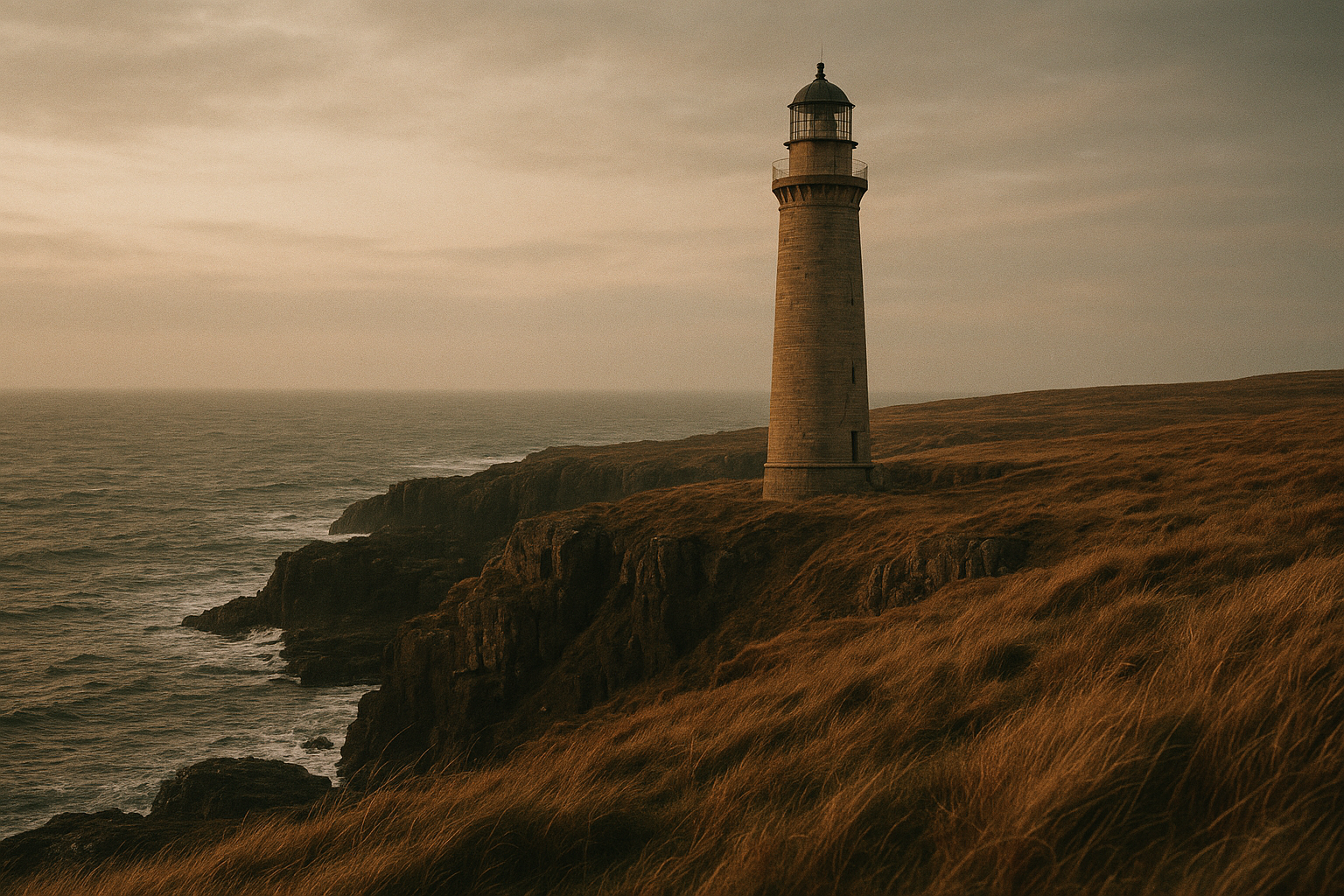
Northern Coast Lighthouses
Explore archive photographs, keeper voices, and preserved towers that shaped navigation on this coast.
Archive highlights
From keeper voices to navigation records, the collection spans people, craft, and coast.
Field Notes
Keeper log excerpts
Daily weather marks and lamp rounds in first-person voice.
Glass Plates
Archive photo sets
Tower repairs, harbor traffic, and storm seasons in sequence.
Signal Books
Navigation references
Light patterns and route notes used along the northern reach.
Route Maps
Preserved tower context
Annotated shoreline links between stations, landings, and villages.
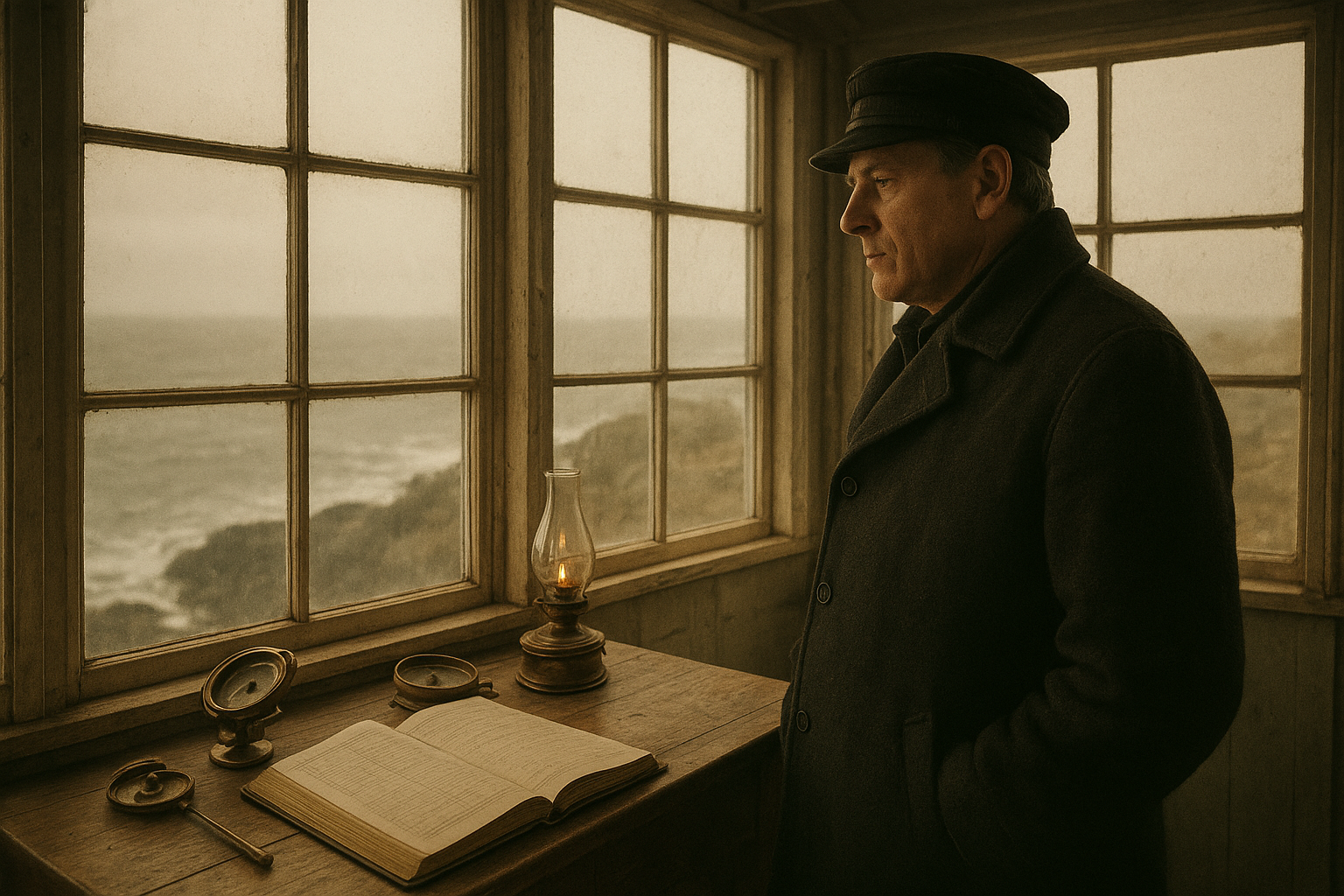
Keeper Stories
Brief excerpts from station records and family recollections reveal routine, weather, and quiet decisions that kept the coast visible.
In repeated fog weeks, Keeper Elin Sorensen logged bell strikes every quarter hour, noting that timing mattered as much as sound for fishing crews feeling their way home.
A January entry from North Reach Station lists lamp wicks trimmed twice nightly and interior panes cleared of frost so the beam would not soften in drifting snow.
One keeper family used lantern shutter codes at dusk to confirm safe crossings for children returning from the mainland schoolhouse during spring tides.
Preserved towers
A quick reference to four preserved landmarks, with concise notes on place, period, and fabric.
Headland setting
Granite tower guarding a narrow approach channel, first lit in 1872 and still used as a daymark.
Distinguishing note: Original fog bell frame remains in place.
Harbor entrance
Compact cast-iron lighthouse raised in 1891 to mark shifting shoals at the old fishing harbor.
Distinguishing note: Iron plates were fully conserved in 2014.
Cliffline approach
Tall masonry light completed in 1858, known for its stepped base cut directly into coastal rock.
Distinguishing note: Lantern glazing follows its 1906 pattern.
Open-shore marker
Early 20th-century reinforced concrete tower built for heavy weather exposure on the outer strand.
Distinguishing note: Listed as a protected structure since 1998.
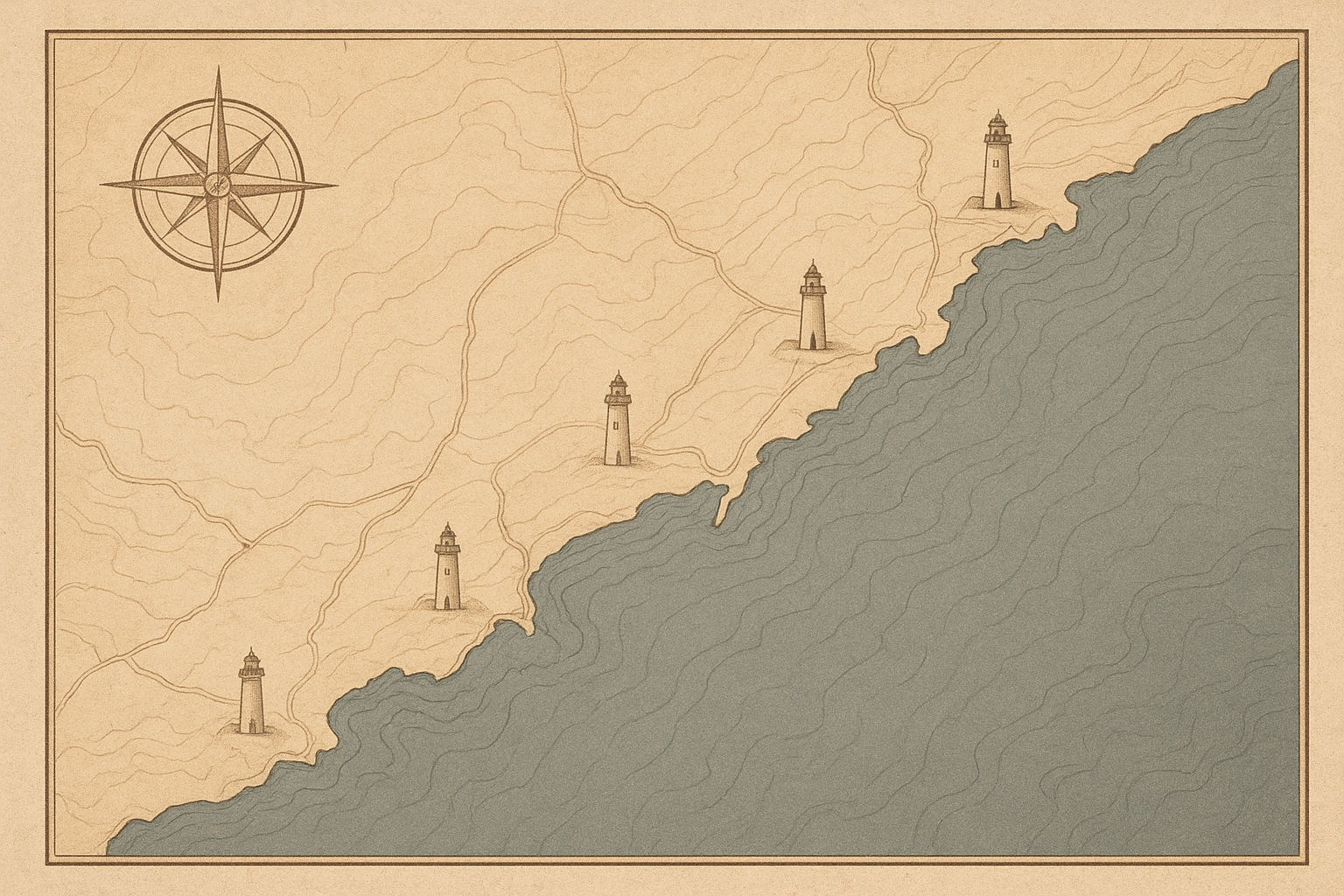
Coastal orientation
A quick visual guide to where historic lights stand today, traced along the shoreline in archival style.
Visiting notes
These notes summarize what typically remains, what can be visited, and how to read archival material alongside present-day conditions.
Survival varies by site: some towers remain complete, others retain foundations, lantern rooms, or associated keeper buildings with varying degrees of restoration.
Public access is often limited and seasonal. Many locations are viewable from surrounding paths, while interior tower entry usually depends on guided programs or safety constraints.
Historic images record earlier coastlines, structures, and equipment. They are best read as dated evidence, then compared with current surveys to understand change over time.
Significance usually reflects a mix of factors: navigational role, engineering rarity, documented keeper lives, and how strongly a site shaped local coastal settlement and trade.
Preservation can include structural stabilization, careful repair, documentation, and public interpretation so the site’s material fabric and historical meaning remain understandable.